Brazil remains one of the largest passenger tire import markets in Latin America. In 2025, the country continued to rely heavily on imported tires to support replacement demand, automotive growth, and nationwide distribution networks. The import landscape highlights China’s dominant market position, growing Southeast Asian competition, and strong opportunities for global suppliers and traders.
Macro Overview
Brazil’s passenger tire import market showed strong resilience throughout 2025 despite increasing trade protection measures and pressure from domestic manufacturers. The replacement tire market remained highly active due to Brazil’s massive vehicle ownership base and stable aftermarket demand.
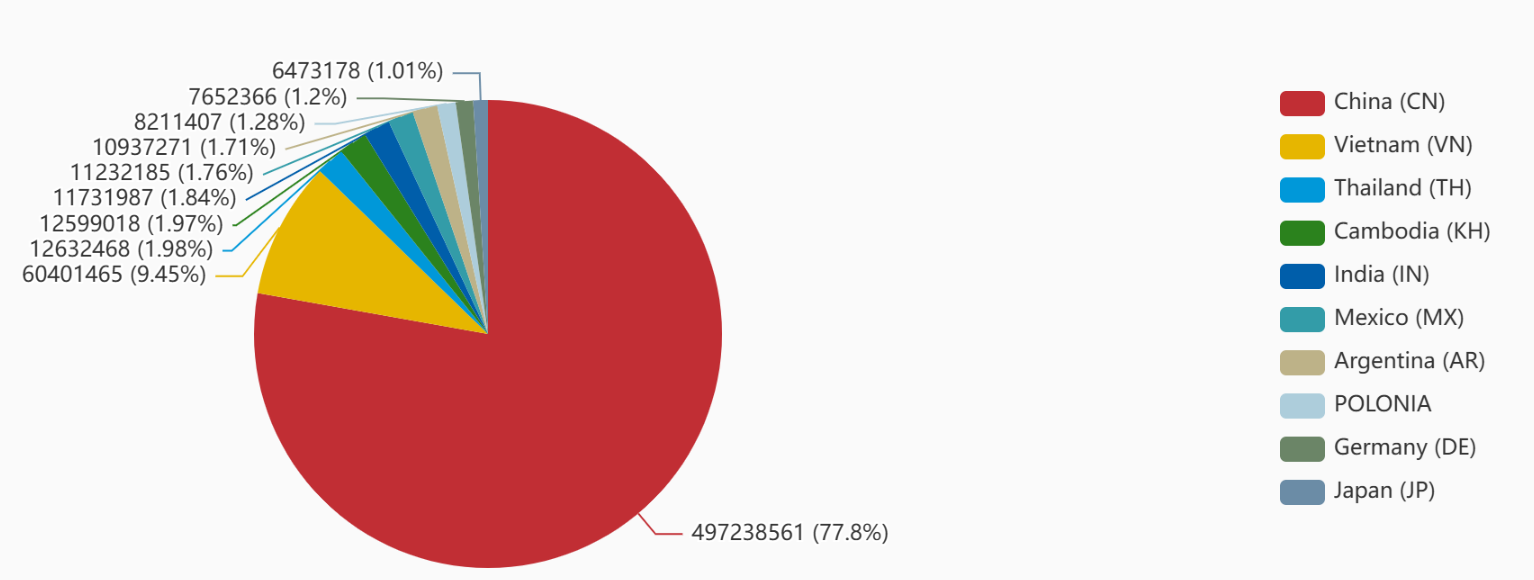
China dominates the supply chain: More than 70% of Brazil’s passenger tire imports originated from China, making it the undisputed market leader.
Emerging Southeast Asia: Vietnam and Cambodia continue gaining share with highly competitive pricing and expanding production capacity.
Price competition intensifies: Average import prices declined during the year, reflecting aggressive competition among global suppliers.
Stable demand structure: Import volumes remained consistent across most months, showing the maturity of Brazil’s replacement tire market.
Top Supplier Countries
Top supplier countries by import value in 2025:
Insights from Major Supplier Countries:
China accounted for over 71% of total import value and nearly 80% of import volume, highlighting its overwhelming dominance in Brazil’s passenger tire market.
Vietnam emerged as the second-largest supplier with highly competitive pricing, reflecting the ongoing shift of tire manufacturing into Southeast Asia.
Thailand and Japan mainly served the mid-to-high-end tire segment, supported by strong manufacturing quality and established automotive supply chains.
European and North American suppliers maintained premium positioning with significantly higher unit prices, targeting luxury and high-performance vehicle segments.
Monthly Import Trends
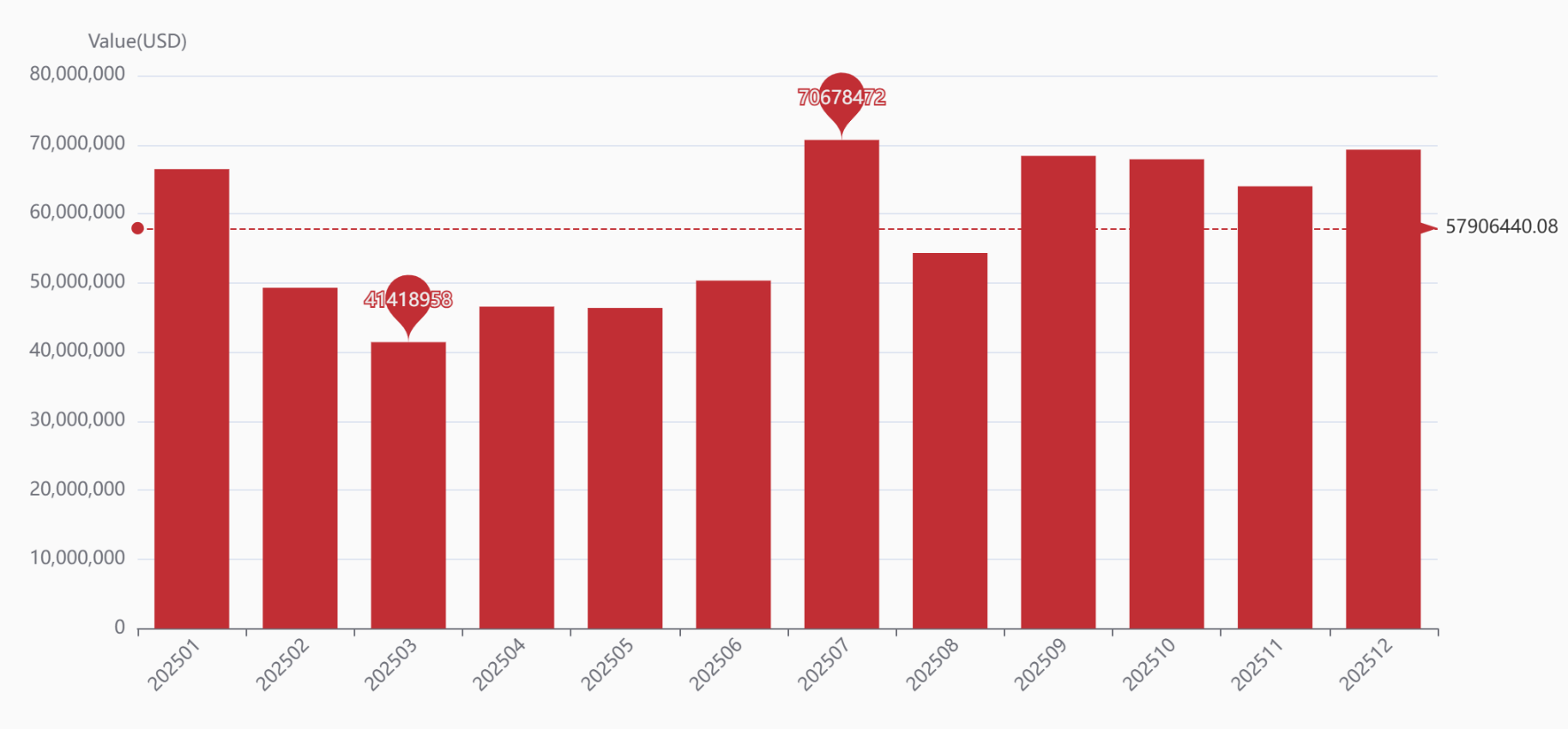
Brazil’s passenger tire imports displayed several strong seasonal peaks during 2025, particularly in January, July, September, and December. These periods likely reflected channel restocking, increased transportation activity, and year-end automotive demand.
Import prices gradually declined throughout the year, indicating intensifying competition among suppliers.
Import quantities remained strong during the second half of the year, demonstrating resilient market demand despite economic uncertainties.
Stable shipment volumes suggest that Brazil’s importer network is highly mature, with long-term buyers maintaining regular procurement cycles.
Key Strategic Takeaways
1. China Remains the Core Supplier – Chinese manufacturers continue to dominate Brazil’s replacement tire market through competitive pricing, massive production capacity, and strong OEM/private-label capabilities.
2. Southeast Asia is Rising – Vietnam and Cambodia are becoming important alternative sourcing regions, particularly for cost-sensitive buyers seeking diversified supply chains.
3. Replacement Market Drives Stability – Brazil’s large vehicle population creates continuous demand for passenger tires, supporting stable import activity throughout the year.
4. Price Monitoring is Critical – Falling average prices indicate growing market competition. Importers and exporters must closely monitor pricing trends to protect margins.
5. Customs Data Provides Strong Commercial Value – Passenger tire imports are highly suitable for customs data analysis due to standardized HS codes, repetitive purchasing behavior, and stable importer relationships.
Conclusion
Brazil’s 2025 passenger tire import market reflects a highly competitive yet opportunity-rich landscape. China overwhelmingly dominates the market, while Southeast Asian suppliers continue expanding their presence. Strong replacement demand, stable importer behavior, and transparent trade flows make the passenger tire industry especially suitable for customs data-driven customer development and market intelligence.